
Stoppage time football has become a flashpoint for controversy, with extended added minutes rewritin
he fourth official's board goes up. Four minutes. The stadium erupts in a mix of groans and desperate hope. Stoppage time football—those anxious, chaotic。often decisive minutes tacked onto the end of each half—has become one of the most scrutinized and controversial aspects of the modern game. It's not just a random add-on;it's a calculated, sometimes maddening, extension of play that can rewrite entire seasons.Referees have always added time for injuries。
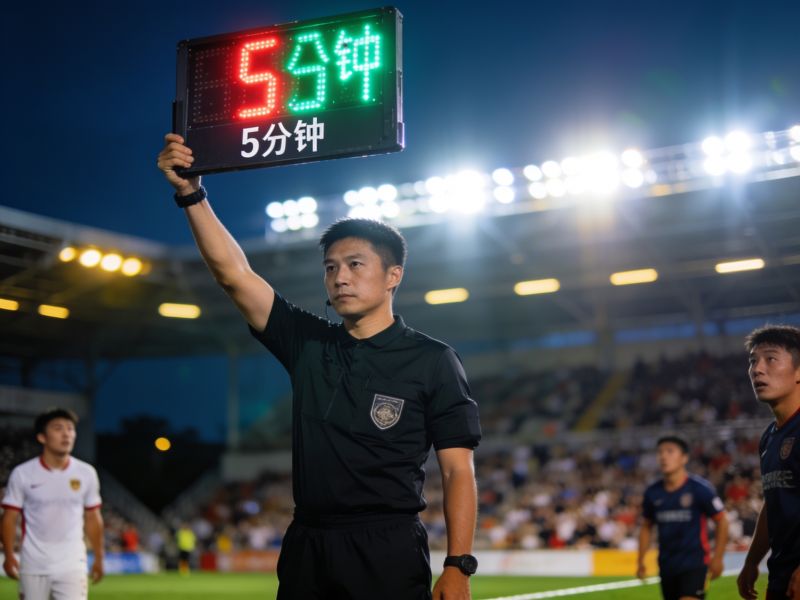
substitutions, and time-wasting. But recent directives from football's law-makers have pushed stoppage time into absurd new territory. At the 2022 World Cup, we saw matches stretch past 100 minutes with alarming regularity. England's group-stage clash with Iran ran for 117 minutes—a marathon that left players cramping and fans checking their watches in disbelief. The logic is simple: if teams waste time, they should pay for it. Yet the execution feels less like justice and more like a guessing game. How much is too much?And who really benefits from a nine-minute second half?I've watched enough lower-league football to know that stoppage time football often feels like a cruel lottery. A team defends heroically for ninety minutes, only to concede from a corner in the 96th because the referee decided a substitution and a cramp were worth an extra five. The players are exhausted. The concentration wavers. Tactical plans dissolve into hoofed clearances and last-ditch lunges. It's compelling drama, sure. But it's also deeply unfair—a sudden, arbitrary twist that punishes discipline and rewards desperation. Supporters of the rule argue it prevents cynical time-wasting. Fine. But there's a difference between adding thirty seconds for a fake injury and tacking on eight minutes because a goalkeeper took his sweet time over a goal kick in the 70th minute.Statistics tell a strange story. Research from the past two seasons shows that goals scored in stoppage time have increased by nearly 30% compared to a decade ago. That's not just because players are fitter or more attacking. It's because there's simply more time to play. For bettors and fantasy football managers, this is a nightmare—and a goldmine. For coaches。it's a tactical headache. Some now deliberately slow the game early, knowing the referee will add it back later, effectively allowing them to control the tempo without penalty. It's a loophole that feels contrary to the spirit of the law. Football's authorities want to eliminate time-wasting, but they've inadvertently created a new form of strategic manipulation.
Where does this leave the humble fan?Stoppage time football is undeniably thrilling—a last-gasp winner in the 94th minute is pure, unfiltered joy. But the unpredictability has grown corrosive. When a match's duration depends on a referee's subjective interpretation of a physio's sprint or a player's slow walk, trust erodes. Perhaps the solution isn't more added time but a clearer, more transparent system—a stop-clock, as some leagues have trialled。or a stricter limit on what can be added. Until then, we're stuck with the drama and the frustration. Stoppage time football isn't going anywhere. But it needs to stop feeling like a roll of the dice.