Pablo Zabaleta's legacy at Manchester City goes beyond trophies. From his blood-soaked heroics again
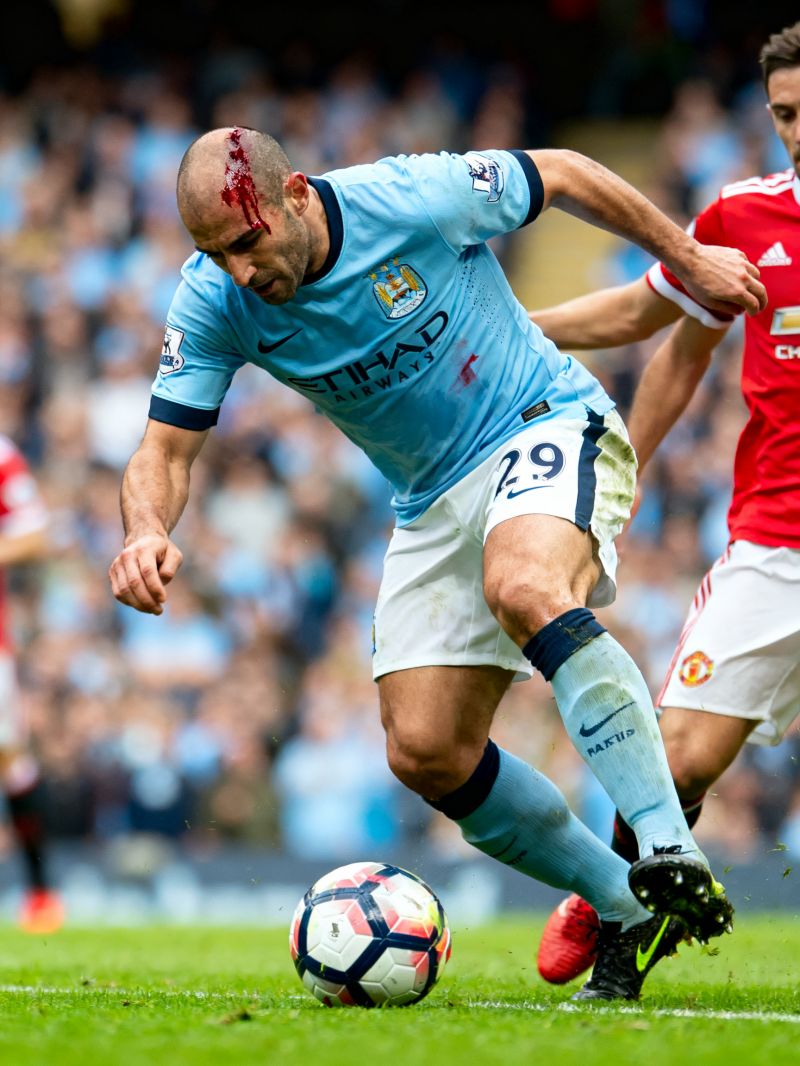
ablo Zabaleta arrived at Manchester City in 2008 for a fee that barely registered. A right-back from Espanyol, unknown to most Premier League fans. Fifteen years later, his name echoes around the Etihad Stadium in a way few defenders ever achieve. Why?Because Zabaleta embodied something raw, something that statistics fail to capture: the stubborn heart of a club transforming from noisy neighbours into champions.I remember watching him during the 2013-14 title run. In a 3-2 win over Liverpool at Anfield, Zabaleta was relentless—tackling, overlapping, arguing with officials, bleeding from a head wound late in the game. He refused to be substituted. That image, blood streaming down his face, became a symbol of City's new mentality. He wasn't the most technically gifted player;his crossing was erratic, his pace waned after his late twenties. But his positioning and reading of the game?
Immaculate. Opponents rarely got past him without a fight. On the ball, he kept it simple, recycled possession, and overlapped with surprising stamina. Zabaleta’s impact wasn't about flair—it was about consistency. He played 333 times for City, winning two league titles。an FA Cup, and two League Cups. But numbers alone don't explain the Zabaleta phenomenon.Fans adored him because he was one of them—only with better lungs. He celebrated tackles like goals. He once said, 'I’d rather make a last-ditch tackle than score a goal.' That authenticity resonated. In an era of PR-trained athletes, Zabaleta was refreshingly unpolished. He learned English by watching television, joked about his bald head, and never hid his emotions. When he left for West Ham in 2017, his farewell was emotional, genuine. City fans still sing his name. That kind of bond is earned。not manufactured.What does Zabaleta's legacy mean for modern full-backs?He wasn't a flying wing-back like Cancelo or a defensive stalwart like Walker. He was a hybrid—a defender first, but one who understood when to join the attack. His tactical discipline allowed City's midfielders to roam. His leadership, quietly fierce, steadied a squad during turbulent title races. Younger players watched how he trained, how he recovered。
how he treated the kit man. Those details matter. Zabaleta set a standard: effort is non-negotiable. In today's game, where full-backs are judged on assists and progressive carries, Zabaleta reminds us that defending still matters. His legacy isn't in highlight reels but in the culture he helped build.Now, when City fans debate their greatest defenders, Zabaleta's name comes up alongside Kompany and Silva. Not because he was the most talented, but because he was the most human. He showed that loyalty and grit can elevate a good player to a legend. Watching him play was like watching a craftsman—unflashy。
reliable, occasionally brilliant. And in the end, that's why he's remembered. Not for the goals, but for the blood, the sweat, and the badge he kissed. That's the Zabaleta way.